Read the lines
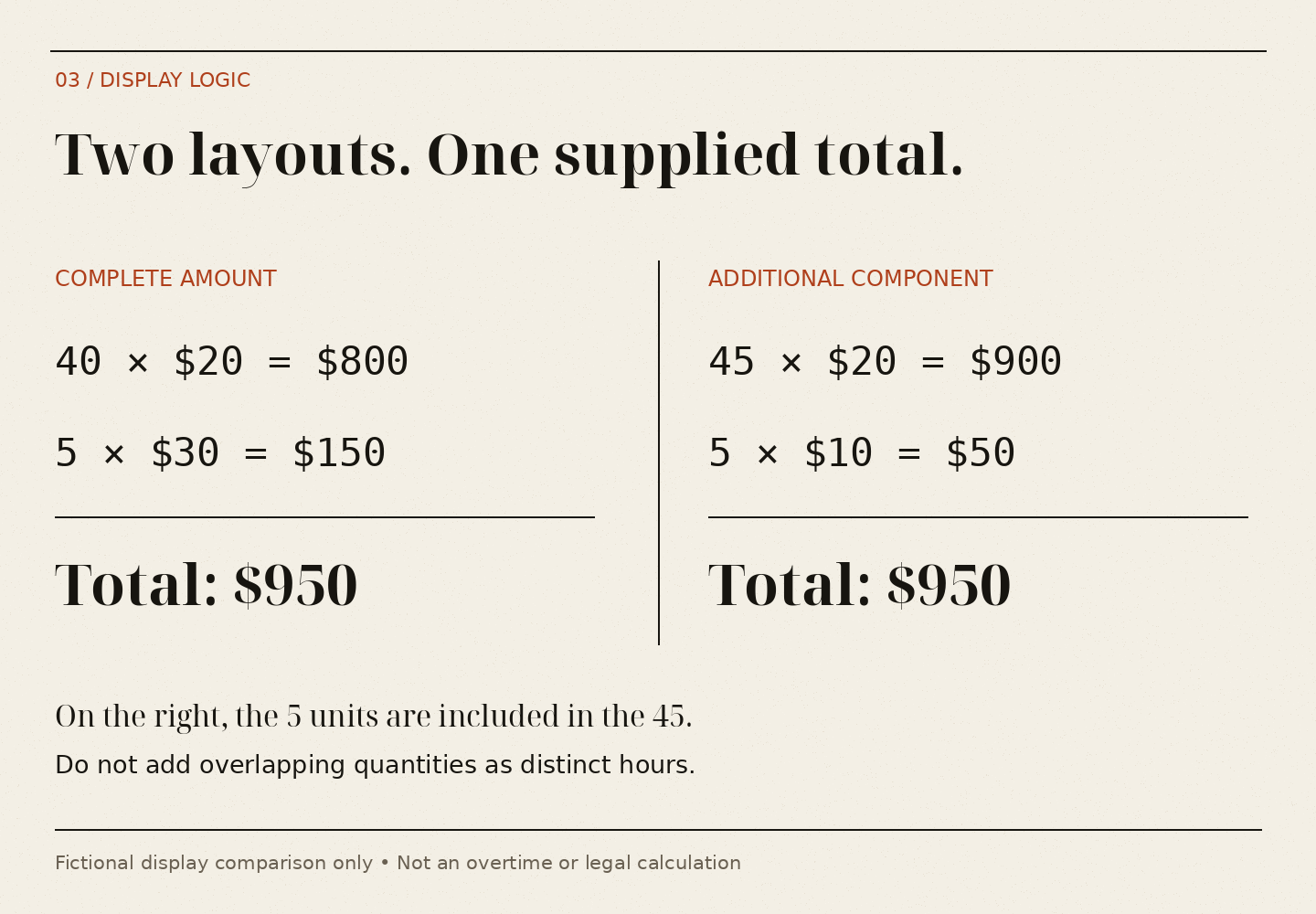
Two Overtime Displays Can Tell the Same Arithmetic Story
A full amount and an additional component look different. The relationship between the rows is the part worth asking about.
Read the numbers. Understand the question.
Independent Fintwist contextThe big picture / record literacy
Follow the arithmetic before you ask the next question.
Hours, earnings, deductions and year-to-date totals. A careful reading starts by giving each number its own job.
THE RECORD ISSUE · ORIGINAL FICTIONAL EXAMPLES
Read the lead story ↗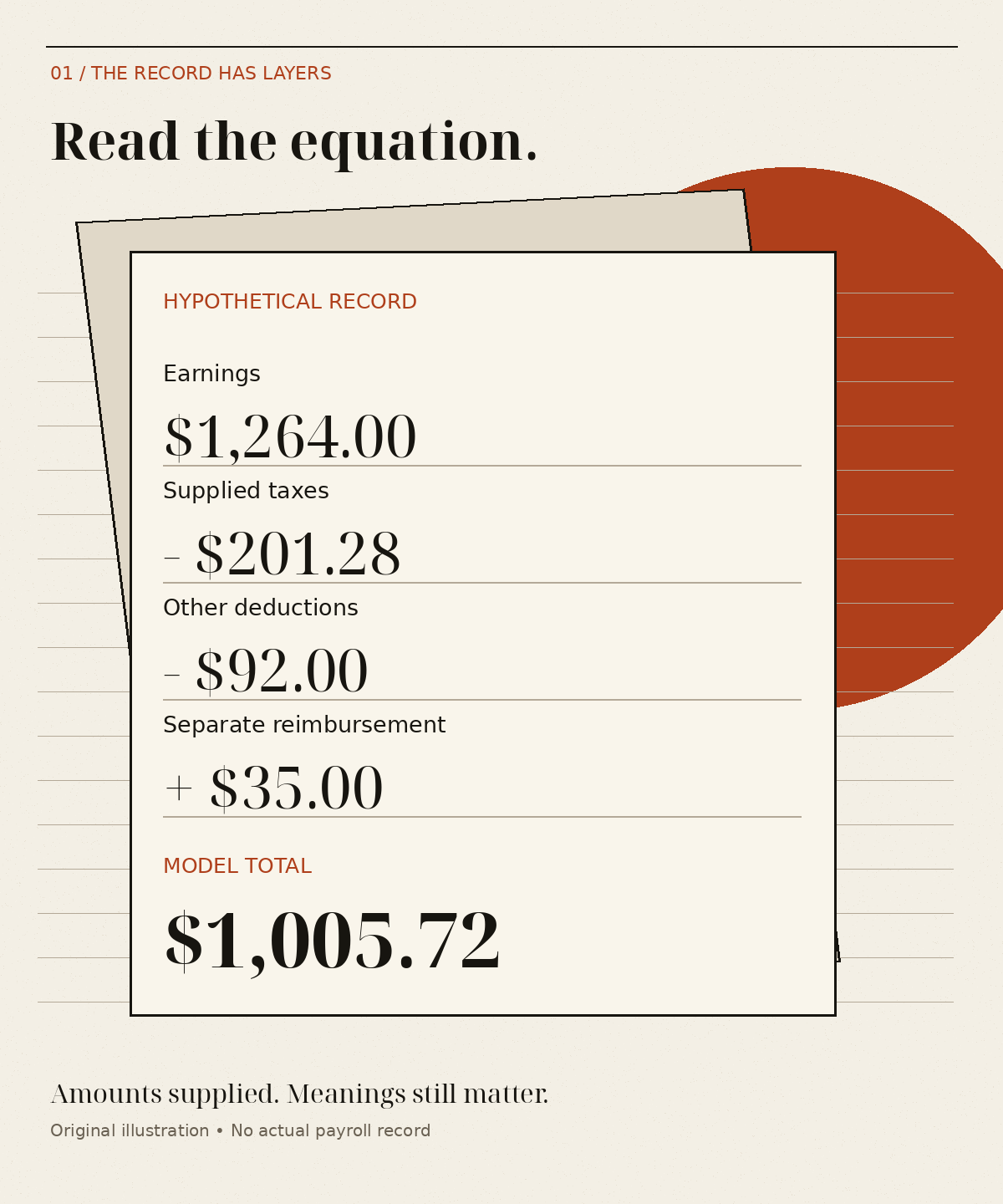
Read the lines
A full amount and an additional component look different. The relationship between the rows is the part worth asking about.
Compare the record
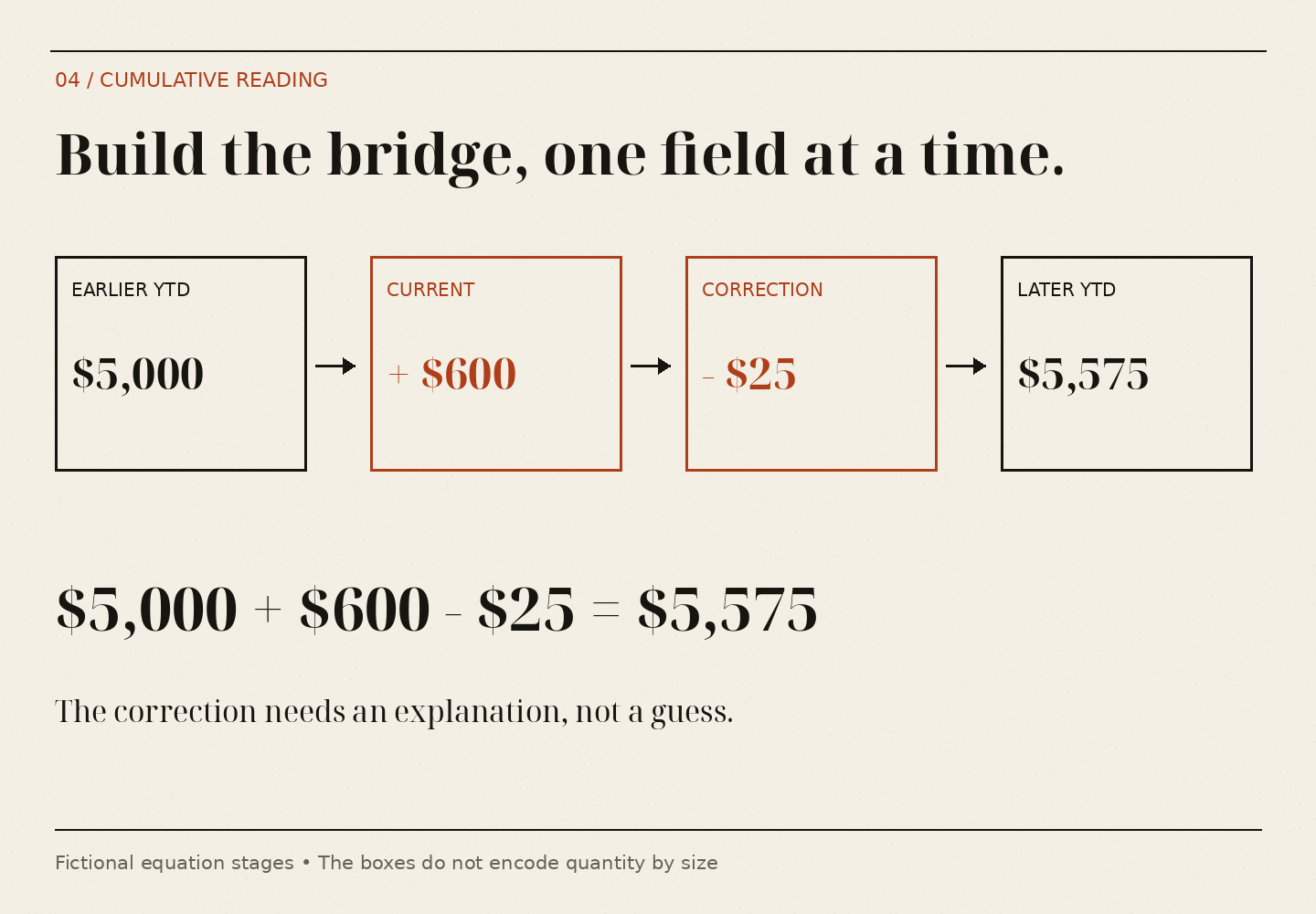
Subtract cumulative values, then ask which current and intervening rows explain the change. Keep the field definition attached.
Follow the adjustment
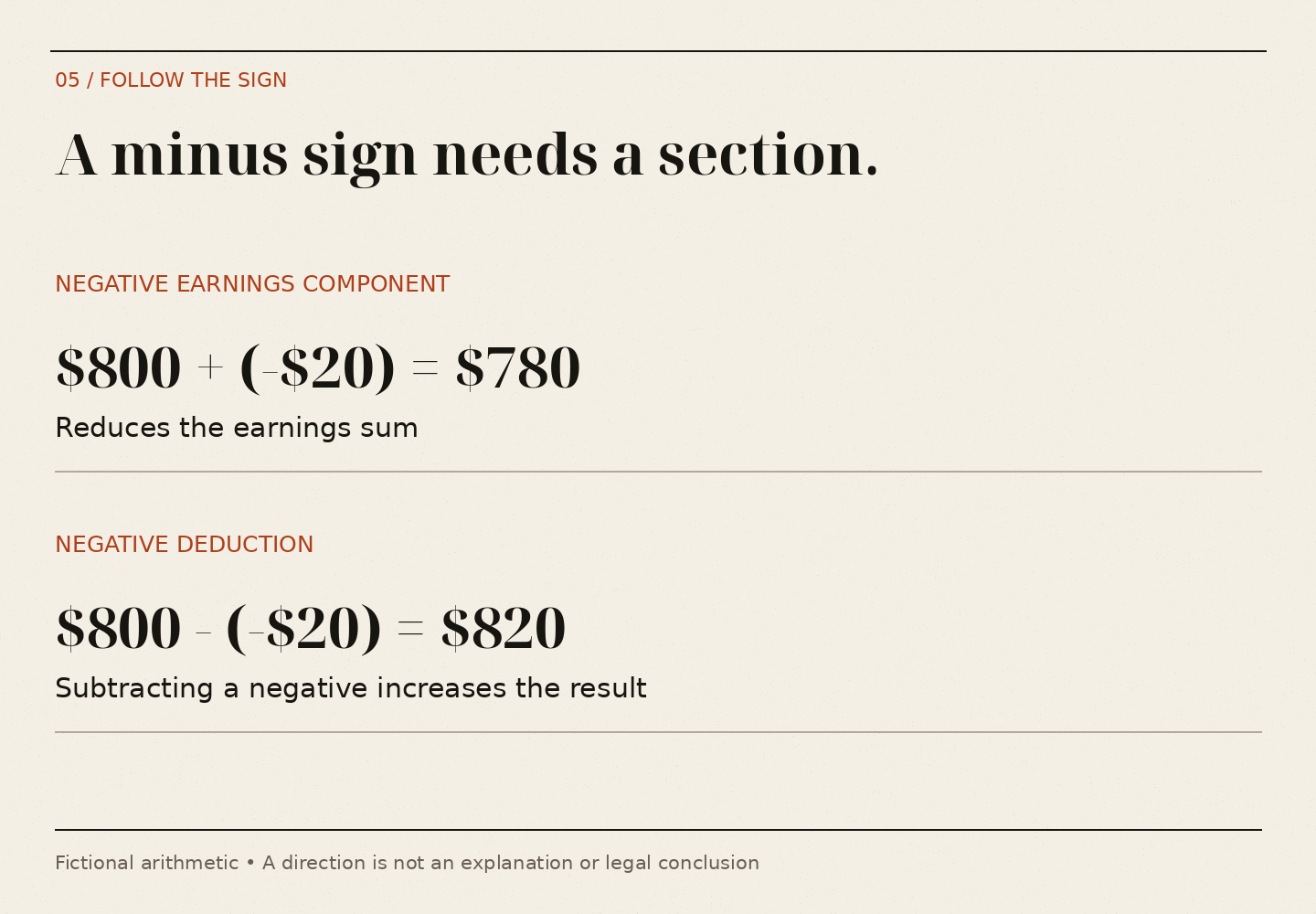
A negative earnings component and a negative deduction move an equation in different directions. A sign still needs an explanation.
An equation can match. A question can remain.
Try a fictional example ↗THE PRACTICE DESK / BROWSER-LOCAL
Practice with invented amounts only. This model adds supplied earnings, subtracts supplied taxes and other deductions, then adds a separately identified reimbursement. It never calculates tax or determines pay owed.
No names, records, accounts or credentials. No uploads, transmission or storage of inputs by this tool. Numbers remain in current-page memory; your browser may independently restore page state.
USD amounts: up to two decimal places, from -999999.99 to 999999.99. Use a minus sign for a hypothetical reversal. Do not include commas or currency symbols.
Choose a fictional example or enter invented amounts, then show the equation.
Fictional earnings: $1,120.00 + $84.00 + $60.00 = $1,264.00. Supplied taxes: $201.28. Supplied other deductions: $92.00. A separate reimbursement outside earnings: $35.00.
$1,264.00 - $201.28 - $92.00 + $35.00 = $1,005.72. A hypothetical displayed total of $1,000.72 is $5.00 lower than the model. Ask which omitted row or inclusion rule explains the difference; do not assume an error.
A matching equation does not verify the input amounts, tax treatment, legal entitlement, deposit timing or account balance. The model assumes the reimbursement is outside earnings and that each input is counted once.
Take a little more time with the labels, the columns and the relationships between them.
12 articles
Start with the record
A paycard is a payment destination. The employer’s pay record tells a different part of the story. Start with three layers and one carefully bounded equation.
Read the article : Three Layers of a Pay RecordRead the lines
A multiplication can be correct while its interpretation is wrong. Decode the unit, the rate and the column before checking the amount.
Read the article : Hours, Rate, Amount: Read the Units FirstRead the lines
A full amount and an additional component look different. The relationship between the rows is the part worth asking about.
Read the article : Two Overtime Displays Can Tell the Same Arithmetic StoryCompare the record
Subtract cumulative values, then ask which current and intervening rows explain the change. Keep the field definition attached.
Read the article : Current and Year-to-Date Need Different QuestionsRead the lines
A short label does not define every wage base. Ask which subtotal or field the deduction changes.
Read the article : Before Tax, After Tax: Which Field Does the Label Affect?Understand the labels
A withholding line can explain the period’s arithmetic without predicting a refund, tax bill or personal tax rate.
Read the article : Withheld This Period Is Not the Final Tax AnswerUnderstand the labels
Bonus, commission and incentive labels are a starting point. Trace the line before giving its net effect a name.
Read the article : The Extra Earnings Line Needs Its Own ExplanationUnderstand the labels
Purpose, arithmetic position and tax classification are three different facts. Keep the reimbursement from being counted twice.
Read the article : Where Does the Reimbursement Enter the Equation?Compare the record
A negative earnings component and a negative deduction move an equation in different directions. A sign still needs an explanation.
Read the article : Follow the Minus Sign Back to Its SectionCompare the record
One destination does not create one payroll record. Preserve a source label on every amount you combine.
Read the article : Two Jobs, Two Sets of DefinitionsStart with the record
Several dates can describe one record. Use the label that points everyone to the same document.
Read the article : The Earnings Period Is a Coordinate, Not a Payday ForecastCompare the record
Start with field definitions. A difference between two totals is a question, not its own explanation.
Read the article : Build a Bridge Between the Final Statement and the Tax Form